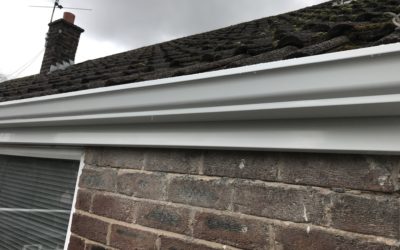
Your roofline does far more than create a neat edge around the roof. Fascias, soffits, bargeboards and cladding protect vulnerable timber, support rainwater systems and help control moisture and ventilation around the eaves.
When one element begins to fail, the effects can spread quickly. Overflowing gutters, damp staining, peeling paint, nesting pests and rotten roof ends are often connected to a roofline issue that has been left too long.
At Guttercare, we have worked on domestic, commercial and industrial properties across Lancashire and South Cumbria since 1978. As a family-run specialist, we assess the whole roof edge rather than treating a loose gutter, damaged board or stained soffit as an isolated problem.
Understanding the parts of your roofline
These components sit close together, but each has a distinct purpose. Knowing what they do makes it easier to spot faults early and to make sensible decisions about repair or replacement.
Fascias are the long boards fixed along the lower edge of a pitched roof. They provide a straight, secure fixing point for gutter brackets and cover the ends of rafters, which would otherwise be exposed to weather.
Soffits are fitted underneath the fascia, closing the underside of the roof overhang. They give the eaves a finished appearance and, where vented, allow air to circulate into the roof space.
Bargeboards perform a similar protective role on the sloping verges of a gable roof. They cover and shield the exposed ends of roof timbers, and their shape often has a major influence on the appearance of period and traditionally styled properties.
Cladding is a broad term for the weatherproof finish applied to exterior walls, dormers, eaves or gable areas. Used well, it can protect difficult-to-maintain surfaces and tie the roofline into the wider design of the building.
Why a sound roofline matters to the rest of the property
A roofline is where roof coverings, rainwater goods, timber structure and external walls meet. It must shed water effectively while coping with movement, wind exposure and the weight of full gutters.
If a fascia softens or pulls away, guttering can lose its correct fall. Water may then spill over the front or back of the gutter, soaking brickwork, window openings and the ground immediately beside the foundations.
We also see moisture enter roof spaces through defective eaves. Persistent damp can contribute to timber decay, mould and reduced insulation performance, although the precise cause should always be investigated rather than assumed.
Ventilation deserves particular attention during any roofline project. Blocking existing airflow with solid boards, insulation or sealant can allow condensation to build up in a loft, so the replacement design needs suitable ventilation where the roof construction requires it.
Warning signs that should not be ignored
Not every stain means the entire roofline needs replacement, but visible deterioration warrants a close inspection. Looking from ground level after heavy rain often reveals problems that are hidden during dry weather.
- Gutters that sag, overflow or have brackets pulling away from the fascia.
- Flaking paint, dark staining, soft timber or open joints around the eaves.
- Soffit panels that bow, crack or show signs of bird, wasp or insect entry.
- Water marks on walls below gutter level or damp patches inside near the roof edge.
- Loose, split or decayed bargeboards at a gable end.
- Cladding that rattles in wind, has distorted panels or gaps around trims and openings.
A blocked outlet can create the same overflow symptoms as a failed gutter, which is why diagnosis matters. Regular professional gutter cleaning and inspection helps us identify whether debris, poor alignment, insufficient capacity or roofline deterioration is the underlying issue.
Repair, capping or full replacement?
The right option depends on the condition of the existing structure, not simply on what is visible from the driveway. A careful survey should include the fascia line, rafter ends, soffit void, gutter brackets, roof covering at the eaves and any signs of water tracking behind the system.
Targeted repair can be appropriate where damage is small and the surrounding timber remains dry, firm and properly secured. Refixing a loose bracket, replacing a local board section or correcting a gutter fall may solve the issue without unnecessary work.
Capping boards are sometimes fitted over existing timber fascias and soffits. This can provide a tidy finish when the original substrate is genuinely sound, dry and capable of supporting the new installation, but it is not a remedy for decay.
Covering rotten timber traps the problem behind a new surface and can make later repairs more involved. We advise homeowners to ask whether the existing boards will be inspected and tested, rather than accepting a quote based only on a visual measurement.
Full replacement is usually the more reliable route where timber is extensively decayed, gutter fixings are insecure or ventilation needs correcting. It allows defective materials to be removed, structural ends to be checked and the new fascia, soffit and gutter system to be installed as one coordinated assembly.
Choosing materials that suit the building
Material selection should balance appearance, durability, maintenance, roof design and budget. There is no single best option for every property, particularly where a modern estate home and a heritage building have very different requirements.
uPVC roofline boards are widely chosen because they are low maintenance, available in white, black, anthracite grey and wood-effect finishes, and do not require routine painting. Quality, correct support and proper expansion allowances are important, as poorly fitted plastic boards can bow or leave untidy joints.
Timber boards can be the most appropriate choice for older homes with original detailing. They can be repaired and painted, but they need thorough preparation, suitable coatings and ongoing maintenance to prevent moisture penetration at joints and exposed end grain.
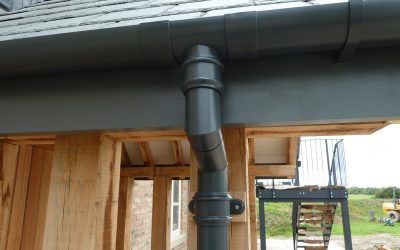
Aluminium components may suit projects seeking a durable, crisp finish, particularly when paired with aluminium rainwater goods. Seamless systems reduce the number of gutter joints along a run; see our recent seamless aluminium guttering installation for an example of how matching gutters and downpipes can complement a roofline renewal.
For listed, period or conservation-sensitive properties, retain the original proportions and architectural character wherever possible. Cast iron rainwater goods and traditionally profiled timber details may be more suitable than standard plastic alternatives, and consent may be needed before altering a protected building.
Getting gutters and roofline design right together
A new fascia is only as effective as the rainwater system fixed to it. Gutter size, outlet positions, downpipe capacity and bracket spacing should be considered in relation to the roof area and local exposure, rather than chosen solely for appearance.
Long gutter runs and valleys collect a substantial volume of water during intense rainfall. Where a system is undersized, even a perfectly installed fascia will not prevent water overtopping the gutter.
We check that gutters have a consistent fall towards outlets, that joints are accessible for maintenance and that downpipes discharge appropriately. On properties with concrete or Finlock gutters, the roof edge requires an especially informed assessment because replacement options must account for the existing construction; our concrete gutter replacement project shows one approach involving new fascia and seamless aluminium guttering.
It is also important not to fasten brackets into weak, thin or unsupported material. Reliable gutter support comes from sound fascia boards, appropriate fixings and sensible bracket spacing, especially on exposed elevations or where snow and leaf build-up are likely.
Common roofline mistakes we encounter
The most costly errors usually arise from treating roofline work as cosmetic maintenance. A clean new finish can conceal poor preparation, inadequate ventilation or an ongoing water-management problem.
- Installing new boards over wet or rotten timber without investigating the source of moisture.
- Replacing gutters without checking fascia strength, falls, outlets and downpipe capacity.
- Closing soffit ventilation where the roof space relies on airflow at the eaves.
- Using incompatible materials or oversized fixings that crack boards and loosen over time.
- Ignoring roof tile, felt support tray or flashing defects immediately above the fascia.
- Choosing a colour or profile that looks out of place on a traditional property.
Access is another consideration that should be planned properly. Work at eaves level carries risks, and a professional installation should use appropriate access equipment, protect surrounding areas and allow enough time to make good the details rather than rushing the visible faces.
Maintenance that helps a roofline last
Low-maintenance does not mean maintenance-free. A simple seasonal check can prevent minor defects from becoming an expensive replacement project.
From ground level, look for overflowing water during rain, displaced guttering, loose ends, algae staining and gaps around soffits or bargeboards. Avoid leaning ladders against gutters or fragile boards, and arrange safe access if closer inspection is needed.
Keep gutters and outlets clear, particularly after autumn leaf fall and stormy weather. Trim back vegetation where practical, as branches can block gutters, rub against cladding and give pests a route towards the eaves.
For painted timber, deal with failed coatings promptly and ensure surfaces are dry before redecorating. For uPVC, wash with mild detergent and water rather than abrasive pads or harsh solvents, which can dull the finish or damage seals.
What to expect from a specialist roofline survey
A useful survey should result in clear advice, not pressure to replace everything. We look at the roofline in context, including existing gutter type, roof pitch, visible water paths, ventilation needs and the condition of the materials supporting the system.
We then explain whether a local repair, partial renewal or complete replacement is the sensible option, along with any limitations that cannot be confirmed until work begins. Older buildings can reveal concealed timber damage once boards are removed, so transparent communication about potential additional remedial work is essential.
Ask what materials will be used, how ventilation will be maintained, whether gutters are included, how waste will be handled and what guarantee applies to the installation and products. You can also find out more about our long-standing local approach on the Guttercare family business.
What We Get Asked…
Can fascias and soffits be replaced without replacing the gutters?
They can, but it is often more efficient to assess both together because gutter brackets must be removed and refixed to the new fascia. Existing gutters may be retained if they are sound, correctly sized and compatible with the proposed roofline.
Do all soffits need ventilation?
No, the requirement depends on the roof design and how the roof space is ventilated elsewhere. We assess the existing arrangement and avoid blocking ventilation paths that are needed to manage condensation.
How long should uPVC roofline boards last?
Service life depends on product quality, installation, weather exposure and maintenance. A properly supported system with clear gutters and secure fixings should provide many years of service, but individual guarantees and manufacturer conditions should always be checked.
Can damaged bargeboards cause a leak?
Yes, particularly if decay allows wind-driven rain to reach exposed timber or if the verge roof covering is also defective. The bargeboard itself may not be the only issue, so the roof edge and adjoining tiles should be inspected together.
Our Final Thoughts
Fascias, soffits, bargeboards and cladding are practical protective elements, not just finishing touches. When designed around the roof, guttering and ventilation requirements of your property, they help keep water where it belongs and preserve the condition of the building beneath.
If you have noticed overflowing gutters, tired timber, loose boards or unexplained damp around the eaves, it is worth arranging an informed assessment before the next period of severe weather. Speak to our roofline specialists for clear, property-specific advice on repairs, replacements and rainwater systems across Lancashire and South Cumbria.